
SummerBuild 2026 is DevHub@iLab’s flagship guided hackathon for students at the Nanyang Technological University, Singapore. Students are given four weeks to design, build, and pitch a portfolio-ready software project. Unlike a 24- or 48-hour sprint, teams had time to learn, receive mentorship, attend workshops, and iterate before a final showcase. This year, Reka joined as sole sponsor, offering a prize for the best use of our API for their project.
25 teams made up of close to 100 students, submitted projects spanning healthcare, sustainability, accessibility, productivity, and everyday life.
“SummerBuild gives NTU students the space to experiment with new technologies and turn early ideas into working prototypes. With Reka’s support, our goals this year were to encourage thoughtful AI integration while helping teams go beyond simply building fast — by identifying real problems, designing around users, and pitching solutions with meaningful impact. What stood out was how teams integrated AI to build practical, user-focused products across areas like healthcare, scam prevention, sustainability, accessibility, and everyday productivity.” says Zong Han, Lead Organiser of SummerBuild 2026.
We spoke with the four winning teams to learn more about the innovative solutions that they have developed.
Pilly — Overall Champion & Best Use of Reka AI
Team: Sunsetters | Prize: Overall Champion + Best Use of Reka AI
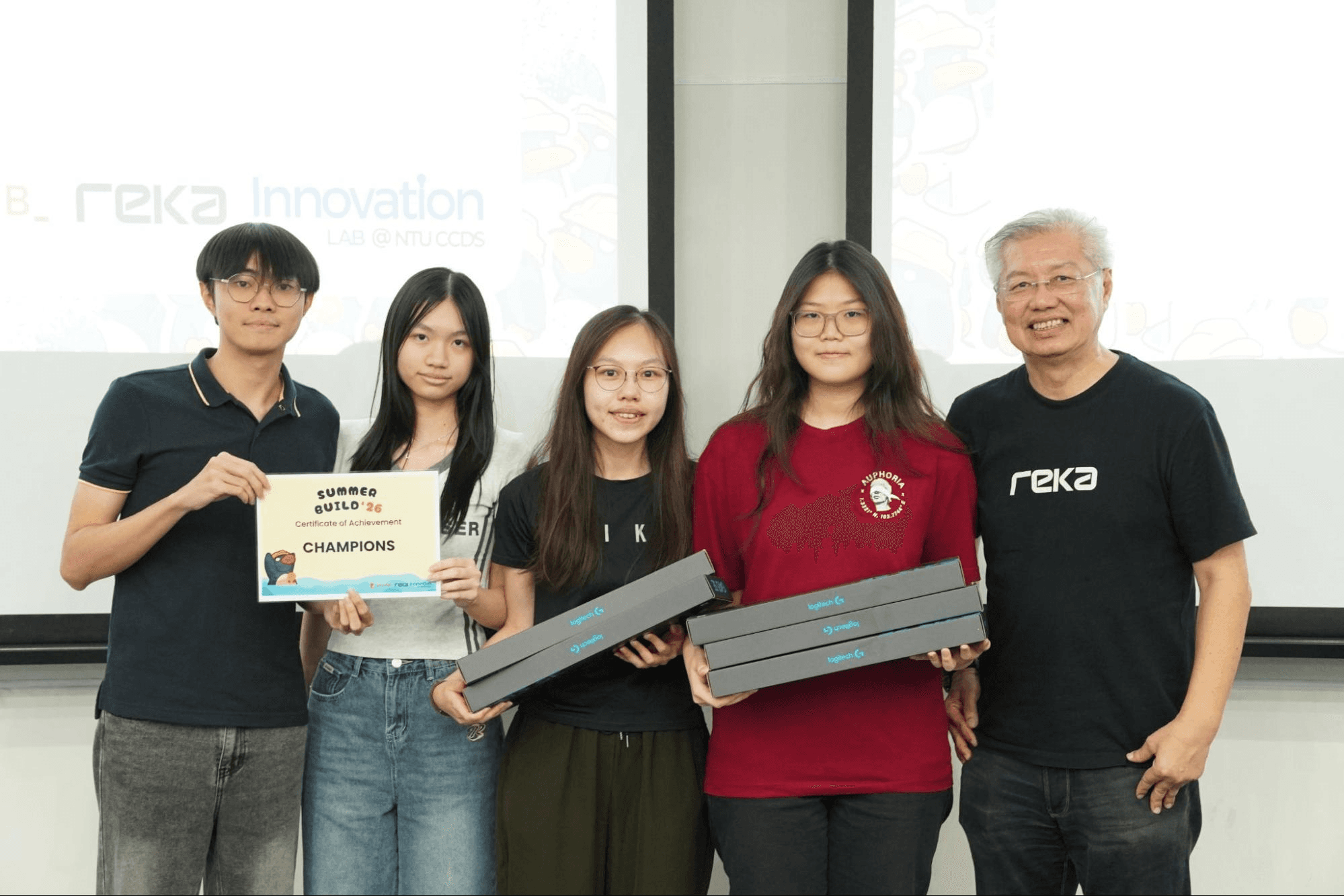
Award ceremony photo - Team Sunsetters with Simon Tan, Vice President of Sales and Partnerships, Asia Pacific, Reka
Pilly was built by five Year 2 NTU Computing students, two of whom had worked inside hospital pharmacies before the hackathon. One had done a part-time stint as a pharmacy assistant at Tan Tock Seng Hospital; another had interned as a nurse at Raffles Hospital Surgery Centre. When the team sat down to brainstorm, they weren’t guessing at problems. They’d seen them firsthand.
“Growing up, we’d always wondered why pharmacy queues took so long. After getting behind the counter ourselves, it made a lot more sense. Pharmacists are juggling multiple verification layers on every single order, and that kind of sustained concentration across a full shift is exhausting. Exhaustion is exactly when miscounts and wrong medications slip through.”
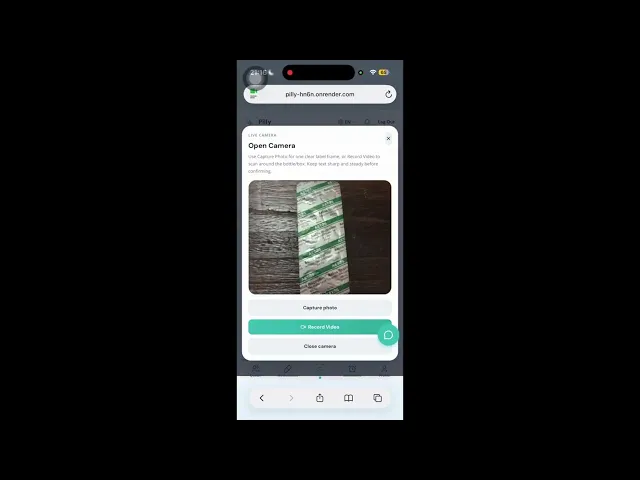
Pilly addresses the problem from both sides. For pharmacists, it acts as an AI verification layer: scanning medication labels, counting pills on blister packs and strips, and flagging mismatches before they reach the patient. For patients, it offers real-time queue tracking, delay notifications, multilingual medication instructions (English, Chinese, Malay, and Tamil), and a chatbot that handles the routine questions that would otherwise tie up the pharmacy phone line.
How Reka fits in
Reka Flash powers two core features: the Ask Pilly chatbot and the medication label scanning in the Scan Medication feature. When a patient photographs their medication and asks a question, “Can I take this with food?”, the image and query go to the Reka Chat API in a single call. Reka reads the label, identifies the medication, and returns a structured answer in the patient’s chosen language. What would normally be a phone call interrupting a pharmacist mid-task resolves in seconds, entirely on the patient’s side.
The team chose Reka partly for its enterprise deployment model. In healthcare, where patient medication data is among the most sensitive data there is, a model that supports on-premise deployment means sensitive data stays within approved boundaries, giving the team confidence that Pilly could meet the compliance standards a real hospital would demand.
The multimodal capability was equally important.
“What really stood out was how naturally it handled different input types, text, images, and even video, all through one API,” the team noted. “For a hackathon where we needed something reliable out of the box, that was a huge time saver.”
Not everything was smooth. Blister pack counting proved harder than expected. The reflective silver foil washed out the edges of each pocket, making a filled blister and an empty one look identical. The team eventually moved pill counting to GPT-4.1 for that specific task, and used a split architecture for translation: Reka for text extraction, GPT-4.1 for Malay and Tamil. “The limitations we hit were very specific edge cases rather than fundamental issues with the model,” the team said. “Overall, the good surprises outweighed the bad.”
Pilly Demo
What’s next
The team’s first target is a hospital pharmacy like Tan Tock Seng, one of Singapore’s largest and pioneering multidisciplinary hospitals, where they saw the queue, fatigue, and verification problems firsthand. From there, they’re looking at public healthcare bodies like MOH as the most practical path to reaching Singapore’s polyclinic network at scale.
The feature they most want to build next: a dispensing robot.
“Picture an arm that picks, counts, and packages the medication, then verifies it against the prescription before release. Pairing our software’s intelligence with a physical robot would take us from assisting the pharmacist to genuinely automating the full loop, making it safer, faster, and available around the clock.” — Sunsetters, Team Pilly
AuraSight — Best Smart Cities Solution
Team: MeowMeow | Prize: Best Smart Cities Solution
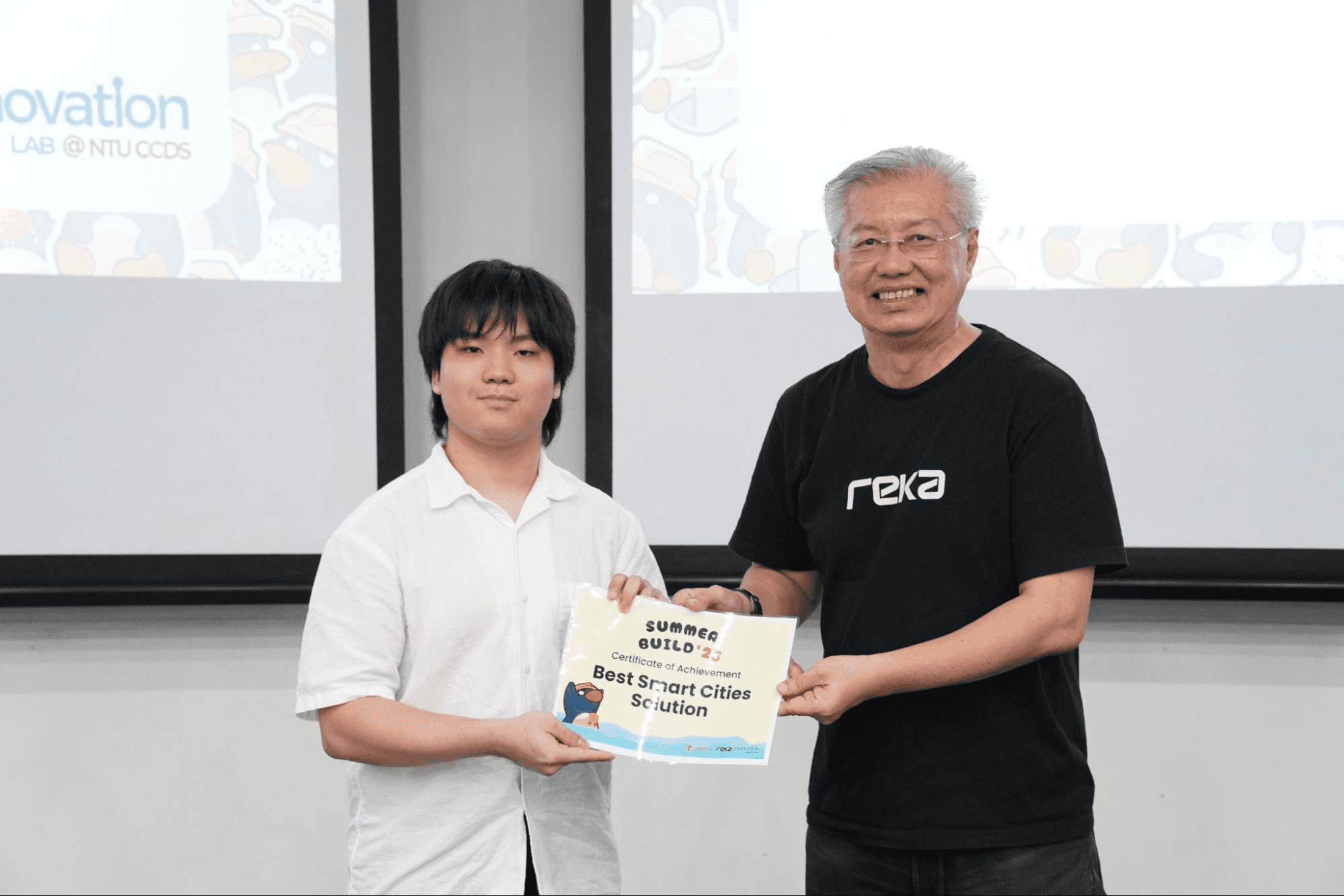
Award ceremony photo - Team AuraSight with Simon Tan, Vice President of Sales and Partnerships, Asia Pacific, Reka
AuraSight was built by four Data Science and AI freshmen at NTU who found each other through faculty orientation. Their starting point was personal: one team member has an elderly relative who recently began showing symptoms of cataracts and shared the difficulties it brought to daily life. The team looked at what tools existed to help visually impaired people navigate crowded urban spaces, and found the options lacking.
The result is a mobile app designed to be worn around the neck, camera pointing forward. Users enter a destination via text or push-to-talk, then receive real-time verbal directions and hazard warnings as they move. Every aspect of the interface was built around accessibility: double-tap to open settings, left- or right-side taps to adjust font size, colour theme, and speech rate, with all on-screen text read aloud.
How Reka fits in
When the app captures a video chunk, the Python FastAPI backend uses ffmpeg, an open-source tool for processing video and audio files, to extract representative frames, which are forwarded to Reka’s visual understanding model. Reka analyses the frames for hazard content and returns a structured description; the backend converts this into a spoken warning string delivered to the user in real time.
The team was struck by what the model did beyond basic object detection.
“Reka’s visual understanding provided more than just accurate object detection, its ability to differentiate hazards and their locations relative to the user exceeded our expectations.” — AuraSight, Team MeowMeow
That spatial reasoning, understanding not just that an obstacle exists, but where it is relative to the person walking, is what makes the warnings actionable rather than generic.
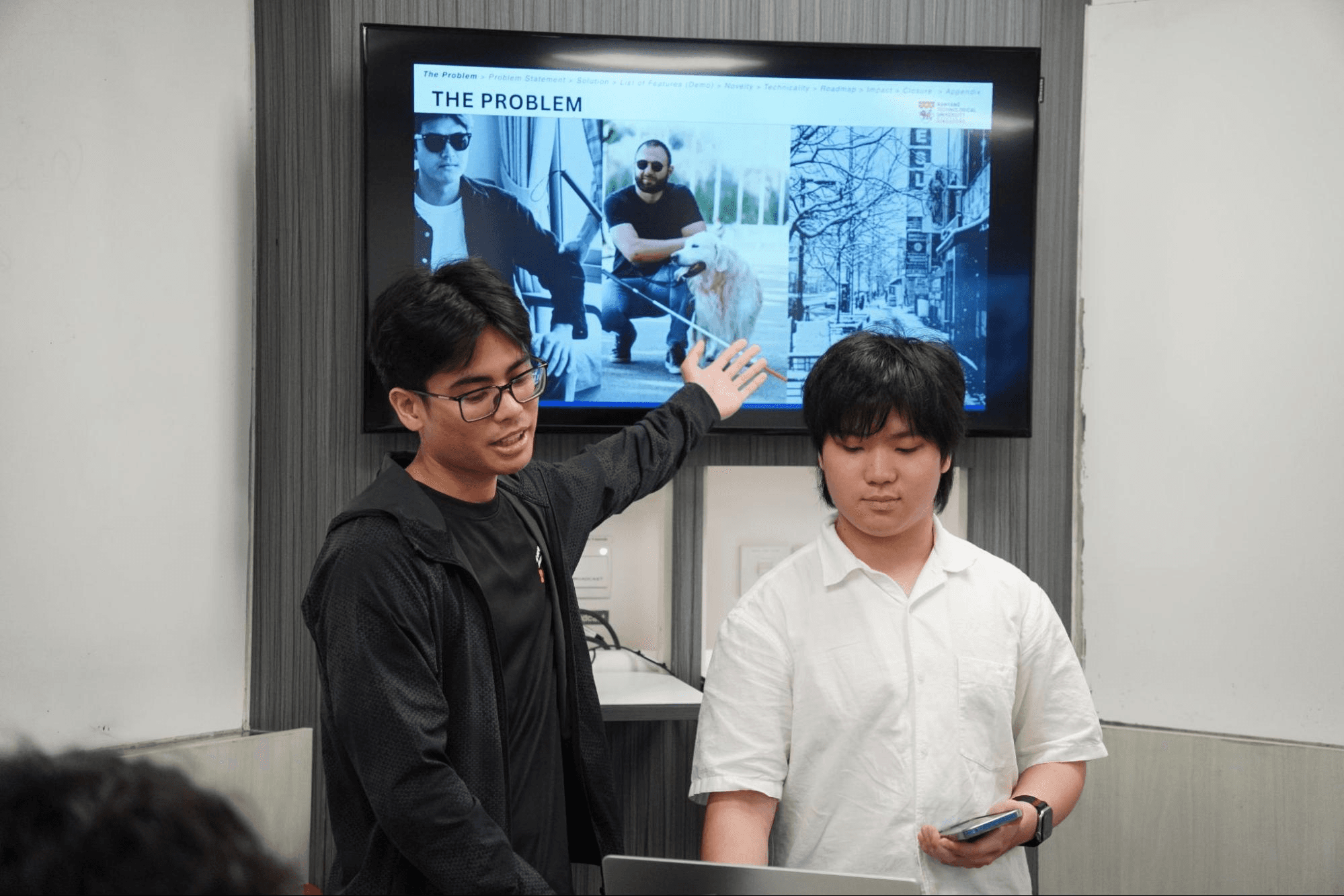
Team presenting AuraSight at SummerBuild
Their advice to other builders: “Try to focus more on how your app handles the Reka output rather than spending hours building pre-processing pipelines, Reka processes multimodal data very efficiently.”
What’s next
The team’s vision is integration with smart wearables, camera glasses like Meta Ray-Bans, where passive environmental awareness becomes genuinely hands-free. “We feel it fits the idea of passive environmental awareness very well,” they said. Their intended users are people still adapting to blindness, using technology to build independence in urban spaces.
RecycleRight — Second Runner Up
Team: Summerbuild Bros | Prize: Most Innovative Solution
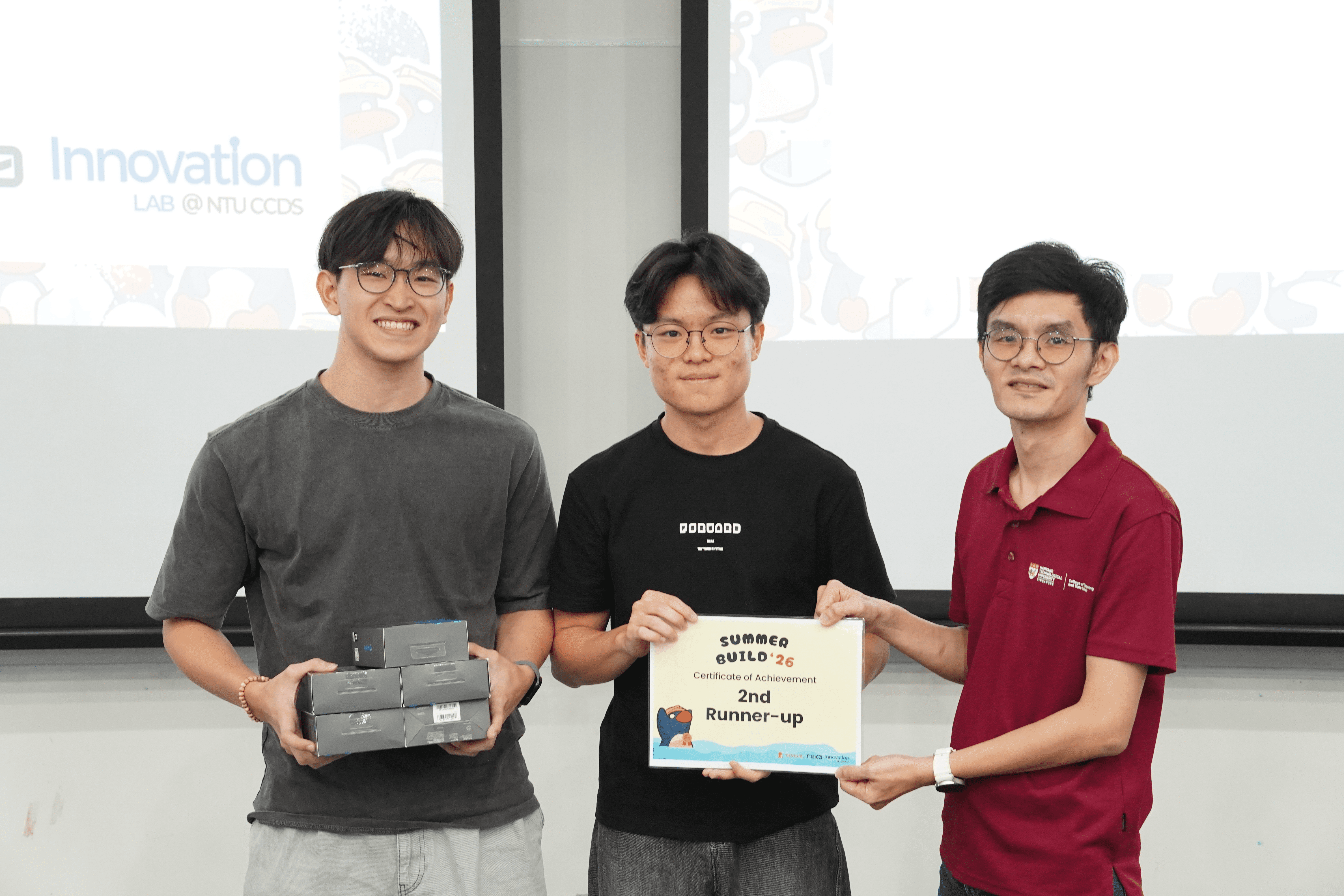
Award ceremony photo - Team SummerBuild Bros with Professor Ong Chin Ann
Singapore has a 40% blue bin contamination rate, a figure published by the National Environment Agency, Singapore’s national body for environmental and public health matters surprised Bryan, Weibin, and David when they came across it. “Most people aren’t malicious recyclers; they’re just uncertain,” the team observed. The fix they wanted to build was a decision point earlier in the process, where you still have time to rinse something or make a different choice.
The three built with strict separation from day one, partly because they were each working with AI coding agents and knew from experience that two agents touching the same files is a recipe for chaos. Weibin built the React Native frontend and bin locator feature; Bryan owned the FastAPI backend and Reka integration; David handled the gamification layer, including postal-code leaderboards that let neighbourhoods compete on recycling performance.
How Reka fits in
A user photographs an item on their kitchen counter. The image hits the FastAPI backend, gets compressed and validated, then goes to Reka Flash alongside a system prompt encoding NEA recycling rules directly. Reka returns a structured JSON object — material type, contamination status, required action, explanation, which passes through a post-processing contamination rule engine before reaching the frontend as an instant verdict card.
The hardest problem was output consistency. The same item photographed repeatedly would come back with different material type labels: a Tetra Pak carton classified as paper on one call, plastic on the next. The fix was enforcing strict output strings directly in the system prompt: a lookup table mapping recognised objects to exact required output strings.
“It’s a simple fix, but it taught us that with LLMs, output stability isn’t just about accuracy; it’s about schema discipline.” — RecycleRight, Team SummerBuild Bros
Out of the box, before any prompt adjustment, Reka was already picking up visual cues the team hadn’t explicitly instructed it to look for: food stains and moisture. “A weaker VLM would have required much heavier post-processing guardrails to compensate,” they noted. “The multimodal quality is what made the whole approach viable within the hackathon timeline.”
What’s next
The team’s near-term target is private property residents, condos and landed homes, where recycling outreach lags behind HDB estates. Longer term, they see the real opportunity in data: every scan creates a labelled image paired with a contamination verdict. At scale, that becomes a training dataset for the facility-level sorting robots that companies like V8 Environmental and SembWaste are already building. “Household scan data could help improve facility AI, creating a feedback loop where better recycling habits at home lead to smarter sorting downstream.”
STEVE — 1st Runner-Up
Team: Lee Kok Peng, Chow Kwok Yao, Marcus, Chaotan | Prize: 1st Runner-Up
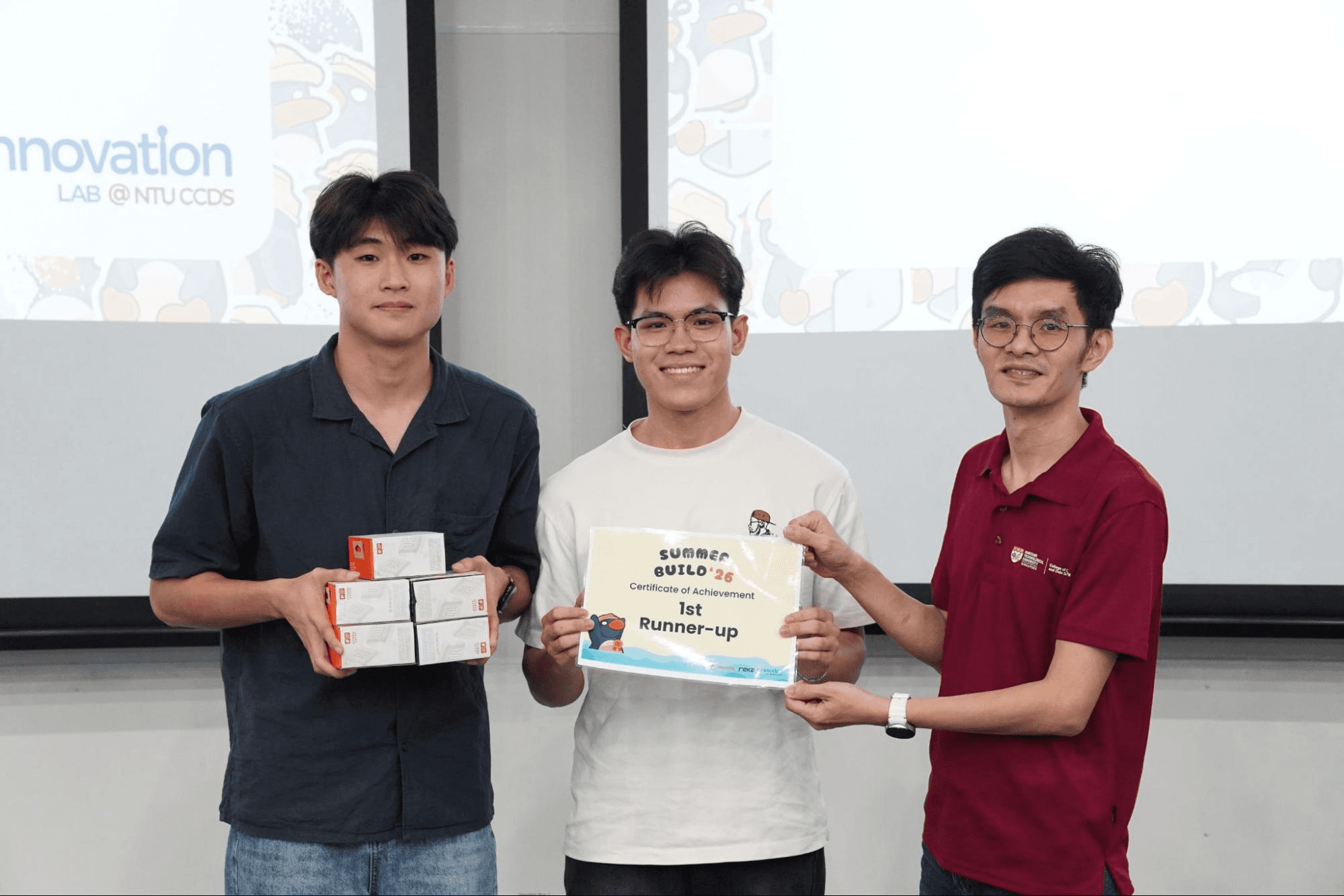
Award ceremony photo - Team LockedInForThis with Professor Ong Chin Ann
STEVE was built by four self-described hackathon rookies, a mix of NTU, Singapore Polytechnic, and SMU students with limited software development experience who wanted to build something meaningful over the summer break. Their observation: people increasingly ask loved ones to take photos of them, with unrealistic expectations on both sides. The person being photographed becomes self-conscious when the results are bad; the photographer experiences performance anxiety with no idea how to help.
STEVE is an AI photography coaching app that walks users through three stages. First, style selection, choosing the aesthetic that fits the moment and the outfit. Second, a scan of the surroundings, where Reka analyses luminous intensity, spatial composition, and environmental context to understand the setting. Third, photo taking, where Reka provides real-time feedback on camera angle and positioning, alongside a silhouette overlay for pose guidance.
How Reka fits in
The app captures camera frames and sends them to a Node.js backend, which passes the images to Reka for analysis. Reka returns coaching advice on framing, lighting, background, pose, and facial expression, displayed to the user in real time. The team found Reka’s responses became more consistent with clear rules, short word limits, and a fixed JSON output format. “The main strength was its multimodal understanding, it could examine the image, follow our photography-coaching prompt, and return structured advice in one response.”
What’s next
The team sees STEVE going well beyond its original use case. Anyone who needs help taking photos of people they care about is a potential user. On the product roadmap: AI analysis of mood boards and sample photos to understand a user’s visual style, and automatic photo enhancement after the shot is taken.
What this hackathon showed
Across all four projects, a pattern emerged: the teams that did the most interesting work with Reka weren’t the ones who spent the most time on pre-processing pipelines or prompt tuning. They were the ones who got clear on what output they needed — a verdict card, a spoken warning, a structured medication answer, and built around that. The multimodal capability handled the rest.
These weren’t demos. Pilly came out of real time in a hospital pharmacy. AuraSight came from a family member losing their sight. RecycleRight came from a statistic that felt wrong and fixable. STEVE came from a simple, relatable frustration.
If you’re building with Reka, get started at docs.reka.ai/quickstart today.
